Introduction to Rural Schooling in The Waltons
The Waltons, a distinguished television series set against the backdrop of the Great Depression and World War II, delves into the intricacies of rural American life through its portrayal of the Walton family in Walton’s Mountain, Virginia. A significant theme woven throughout the series is rural schooling and the unique challenges and values of education in such communities.
Educational Setting and Structure
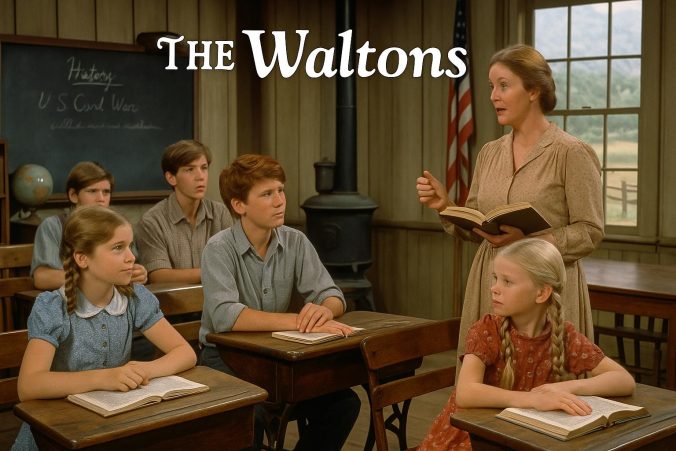
In The Waltons, the depiction of the rural educational framework is highlighted through the family home nestled in a small, tight-knit community. The show accentuates the importance of education as a communal endeavor, focusing on the one-room schoolhouse prevalent in many rural locales during that era. These schoolhouses served as foundational learning institutions, often operating with limited resources. A single teacher was tasked with the responsibility of instructing students spanning various age groups and academic levels. This environment necessitated a multifaceted teaching approach, requiring educators to be exceptionally resourceful and versatile. They created a dynamic learning atmosphere where children, despite their different stages of education, collectively explored subjects under the same roof.
The one-room schoolhouse not only served as an educational facility but also as a community hub where social events took place. Families relied on this centerpiece for both academic and social gatherings, further deepening its significance within the rural setting.
Role of the Teacher
In the series, figures such as Miss Rosemary Hunter and later Miss Mamie Baldwin embody the resilience and adaptability imperative for teachers working in rural schools. Their roles extend beyond mere educators; they become pillars of moral and ethical guidance within the community. Miss Hunter and Miss Baldwin’s duties involved managing diverse curricula spread over multiple grades, reflecting the considerable demands of their positions. Teachers in these settings often faced the challenge of limited resources but found innovative ways to impart knowledge and foster learning.
The dedication of these teachers is shown in their daily interactions with students, taking personal interest in their progress, and offering counsel that transcended academic teachings. Their influence extended beyond the classroom, impacting how students perceived and tackled the challenges of life outside school.
Curriculum and Resources
The curriculum within The Waltons is a reflection of the minimal resources typical of rural educational settings. Educational tools such as textbooks and other materials were a scarcity, often shared among students. The necessity for creativity in teaching methods was evident, with emphasis placed on practical skills that prepared students for their future roles in farming, homemaking, and other community-centric responsibilities.
The show also portrays lessons in life skills and social values, which were just as critical as academic knowledge. Students were taught not only to excel in their studies but to also cultivate the virtues of cooperation, patience, and diligence necessary for community life and future endeavors.
Community Involvement
A pivotal element highlighted in The Waltons is the crucial involvement of the community in the educational process. Schools during this time relied heavily on parental and community participation. Families and community members engaged in activities ranging from fundraising events to volunteer services, all aimed at supporting the school and enhancing student experiences.
This collective commitment illustrated the strong ties within rural communities, where education was seen as a communal responsibility, ensuring that even amidst economic adversities, educational pursuits were sustained. The series illustrates how this involvement created an environment where everyone worked together to overcome challenges, strengthening the bonds that held the community together.
Challenges Faced by Rural Schools
The Waltons takes a realistic approach to the portrayal of rural education by addressing the pressing challenges that beset these schools. Financial limitations often meant that school facilities were basic and sometimes inadequate, while geographic isolation limited students’ access to modern educational resources. Despite these constraints, teachers and students found ways to adapt and make the most of their circumstances.
Economic hardships, depicted through the struggles of families during the Great Depression, had direct impacts on school attendance and the overall educational experience. Some students had to balance academic responsibilities with labor contributions to their households, which often interfered with consistent schooling.
The Importance of Education
The narrative of The Waltons consistently underscores education as a vehicle toward a brighter future. This theme is personified in the character of John-Boy Walton, whose aspirations to become a writer motivated him to pursue education diligently. John-Boy’s journey throughout the series illustrates how education served as a beacon of hope and transformation for individuals and the community as a whole.
Education’s transformative power echoes through John-Boy’s experiences as he navigates challenges, driven by his dreams and the encouragement of his family and teachers. His story provides an inspirational lens through which the potential of education, even amidst adversity, is magnified.
Conclusion
The Waltons offers an enriching depiction of rural education amid the financial and social difficulties characterizing a turbulent period in American history. It captures the essence of rural schooling, showcasing both its trials and its pivotal role as a bastion of community and growth.
Through highlighting the pivotal roles of dedicated teachers, the valuable community involvement, and the enduring vision for personal and communal betterment, The Waltons presents a timeless and insightful exploration of the significance of education. The series remains a poignant reminder of the potential of education as a unifying and transformative force within and beyond rural America.